

What We Found When We Tested for Microplastics (and Why It Matters)
Because assumptions don’t provide confidence; real testing does
If you’re a parent, you’ve probably had this thought: “Plastic may not be that safe for my kid”. It makes sense. We’ve all seen the headlines about microplastics sneaking into water, food, even the air. But here’s the truth: what matters most isn’t what your baby’s food comes in, it’s how that packaging is made, tested, and verified.
That’s why at Babylife Organics, we didn’t just guess, we tested.
We tested our Stage 2 pouch varieties for microplastics
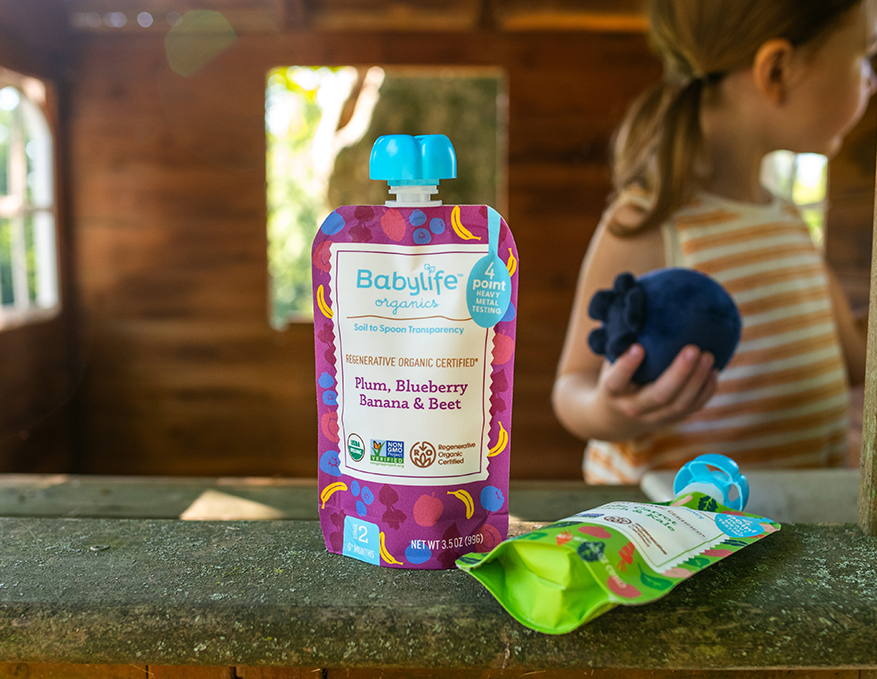
Every current Babylife Organics Stage 2 pouch variety was tested for 40 types of plastics commonly classified as microplastics—materials that can form through the breakdown of larger plastics or be introduced during manufacturing and packaging.
And here’s what we found:
That doesn’t mean “plastic-free” (because no one can promise that). It means an independent certified lab ran the tests, assessed the data, and found non-detectable levels across the board.
This testing isn’t a one-time thing. It’s ongoing and independent, part of our quarterly-to-semiannual quality checks designed to ensure that the food touching your baby’s spoon (or pouch) meets the highest standards: yours.

Why we tested pouches
Most parents assume pouches = risky. But that’s not always true.Other materials don’t automatically equal “no contamination,” and plastic doesn’t automatically equal “problem.”
Our pouches are made using carefully selected, non-toxic materials that meet the highest safety standards. But assumptions don’t build trust; testing does.
So we took it further. By testing our Stage 2 pouch varieties for dozens of known microplastic compounds, we wanted to verify safety, not just claim it.
The testing process: comprehensive, not cosmetic
When we say “tested,” we mean it. Here’s how it works:
Sampling
Samples of all pouch varieties are pulled from regular inventory, collected, and sent to independent certified labs.
Detection Range
Each pouch variety is tested and screened for over 40 plus plastic types, including common microplastics.
Analysis
Independent, certified third-party lab personnel conducting testing using sensitive detection methods to determine whether any microplastics are present, and if so, at what levels.
Results
To date, all of our Stage 2 pouch varieties have received test results showing non-detectable levels, which means any potential trace is below the scientific detection threshold.
Transparency isn’t new for us—it’s who we are
This is the same philosophy behind our SOIL TO SPOON TRANSPARENCY™—SOIL TO SPOON POINT HEAVY METAL TESTING, Regenerative Organic Certified® farming, and single supply partner model. We believe safety shouldn’t be a buzzword—it should be measurable, visible, and verifiable.
That’s why you can see our microplastic testing results right on our website, alongside details about every stage of our SOIL TO SPOON TRANSPARENCY process.
Why this matters (and why we’re talking about it)
Because no one else is. Other baby food brands talk about being “clean” (we don’t use that word 😉), “safe,” or “sustainable,” but few share actual data. We’d rather show receipts.
Our microplastics testing gives parents real evidence that our packaging is as intentional as what’s inside it. Every pouch is part of our bigger promise to raise the standard for baby food and to always back our claims with proof.
This isn’t the end of the story. It’s another chapter in our journey of transparency, and one we’re proud to share.